My photo
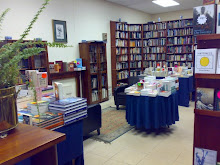
Shop 139, Irene Village Mall. Cnr. Nellmapius and Pierre Van Reyneveld Roads. Irene. Centurion.Gauteng. Republic of South Africa. Monday-Thursday : 09:00 - 19:00 Friday : 09 : 00 - 20 : 00 Saturday : 08 : 00 - 18 : 00 Sunday : 09 : 00 - 17 : 00 Telephone : 27 (0)12 662 2829 E-Mail : tallstories@megaweb.co.za There is no substitute for knowledge. Tall Stories is a book shop offering fine books for discerning readers. We sell only the best books: collectables, africana, publishers overstocks and quality pre-loved books. We also buy good books, every day of the week. Come to us for that elusive africana you have been searching for - be it botany, travel, hunting, zoology or other. Impress your friends with your collection of Dostoevsky and Murakami. We accept Visa, AMEX. and Mastercard

Sunday, November 20, 2011

The Lady of Shalott by Alfred Lord Tennyson

The Lady of Shalott by Alfred Lord Tennyson

"Alfred Tennyson, 1st Baron Tennyson, FRS (6 August 1809 – 6 October 1892) was Poet Laureate of the United Kingdom during much of Queen Victoria's reign............"

"...Born on August 6, 1809, in Somersby, Lincolnshire, England,Alfred Tennyson is one of the most well-loved Victorian poets. Tennyson, the fourth of twelve children, showed an early talent for writing. At the age of twelve he wrote a 6,000-line epic poem.......".


The Poem has inspired many artists & musicians.

William Holman Hunt,The Lady of Shalott, c.1889-92. Manchester, Manchester City Art Gallery.


W.E.F. Britten's photogravure

John William Waterhouse (1849–1917) I am half-sick of shadows, said the Lady of Shalott. 1916. Oil on canvas.

John William Waterhouse: The Lady of Shalott [on boat] - 1888.Oil on canvas.The Tate Gallery- London, England

Actual Size (W x H): 200cm x 153cm

You can listen to musician, Loreena McKennitt's version of the Lady of Shalott :

"Loreena McKennitt (born February 17, 1957) is a Canadian singer, composer, harpist, accordionist and pianist who writes, records and performs world music..........."
The Lady of Shalott

by

Alfred Lord Tennyson


Part I

On either side the river lie

Long fields of barley and of rye,

That clothe the wold and meet the sky;

And thro' the field the road runs by

To many-tower'd Camelot;

And up and down the people go,

Gazing where the lilies blow

Round an island there below,

The island of Shalott.


Willows whiten, aspens quiver,

Little breezes dusk and shiver

Thro' the wave that runs for ever

By the island in the river

Flowing down to Camelot.

Four gray walls, and four gray towers,

Overlook a space of flowers,

And the silent isle imbowers

The Lady of Shalott.


By the margin, willow veil'd,

Slide the heavy barges trail'd

By slow horses; and unhail'd

The shallop flitteth silken-sail'd

Skimming down to Camelot:

But who hath seen her wave her hand?

Or at the casement seen her stand?

Or is she known in all the land,

The Lady of Shalott?


Only reapers, reaping early

In among the bearded barley,

Hear a song that echoes cheerly

From the river winding clearly,

Down to tower'd Camelot:

And by the moon the reaper weary,

Piling sheaves in uplands airy,

Listening, whispers " 'Tis the fairy

Lady of Shalott."


Part II

There she weaves by night and day

A magic web with colours gay.

She has heard a whisper say,

A curse is on her if she stay

To look down to Camelot.

She knows not what the curse may be,

And so she weaveth steadily,

And little other care hath she,

The Lady of Shalott.


And moving thro' a mirror clear

That hangs before her all the year,

Shadows of the world appear.

There she sees the highway near

Winding down to Camelot:

There the river eddy whirls,

And there the surly village-churls,

And the red cloaks of market girls,

Pass onward from Shalott.


Sometimes a troop of damsels glad,

An abbot on an ambling pad,

Sometimes a curly shepherd-lad,

Or long-hair'd page in crimson clad,

Goes by to tower'd Camelot;

And sometimes thro' the mirror blue

The knights come riding two and two:

She hath no loyal knight and true,

The Lady of Shalott.


But in her web she still delights

To weave the mirror's magic sights,

For often thro' the silent nights

A funeral, with plumes and lights

And music, went to Camelot:

Or when the moon was overhead,

Came two young lovers lately wed:

"I am half sick of shadows," said

The Lady of Shalott.


Part III

A bow-shot from her bower-eaves,

He rode between the barley-sheaves,

The sun came dazzling thro' the leaves,

And flamed upon the brazen greaves

Of bold Sir Lancelot.

A red-cross knight for ever kneel'd

To a lady in his shield,

That sparkled on the yellow field,

Beside remote Shalott.


The gemmy bridle glitter'd free,

Like to some branch of stars we see

Hung in the golden Galaxy.

The bridle bells rang merrily

As he rode down to Camelot:

And from his blazon'd baldric slung

A mighty silver bugle hung,

And as he rode his armour rung,

Beside remote Shalott.


All in the blue unclouded weather

Thick-jewell'd shone the saddle-leather,

The helmet and the helmet-feather

Burn'd like one burning flame together,

As he rode down to Camelot.

As often thro' the purple night,

Below the starry clusters bright,

Some bearded meteor, trailing light,

Moves over still Shalott.


His broad clear brow in sunlight glow'd;

On burnish'd hooves his war-horse trode;

From underneath his helmet flow'd

His coal-black curls as on he rode,

As he rode down to Camelot.

From the bank and from the river

He flash'd into the crystal mirror,

"Tirra lirra," by the river

Sang Sir Lancelot.


She left the web, she left the loom,

She made three paces thro' the room,

She saw the water-lily bloom,

She saw the helmet and the plume,

She look'd down to Camelot.

Out flew the web and floated wide;

The mirror crack'd from side to side;

"The curse is come upon me," cried

The Lady of Shalott.


Part IV

In the stormy east-wind straining,

The pale yellow woods were waning,

The broad stream in his banks complaining,

Heavily the low sky raining

Over tower'd Camelot;

Down she came and found a boat

Beneath a willow left afloat,

And round about the prow she wrote

The Lady of Shalott.


And down the river's dim expanse

Like some bold seer in a trance,

Seeing all his own mischance--

With a glassy countenance

Did she look to Camelot.

And at the closing of the day

She loosed the chain, and down she lay;

The broad stream bore her far away,

The Lady of Shalott.


Lying, robed in snowy white

That loosely flew to left and right--

The leaves upon her falling light--

Thro' the noises of the night

She floated down to Camelot:

And as the boat-head wound along

The willowy hills and fields among,

They heard her singing her last song,

The Lady of Shalott.


Heard a carol, mournful, holy,

Chanted loudly, chanted lowly,

Till her blood was frozen slowly,

And her eyes were darken'd wholly,

Turn'd to tower'd Camelot.

For ere she reach'd upon the tide

The first house by the water-side,

Singing in her song she died,

The Lady of Shalott.


Under tower and balcony,

By garden-wall and gallery,

A gleaming shape she floated by,

Dead-pale between the houses high,

Silent into Camelot.

Out upon the wharfs they came,

Knight and burgher, lord and dame,

And round the prow they read her name,

The Lady of Shalott.


Who is this? and what is here?

And in the lighted palace near

Died the sound of royal cheer;

And they cross'd themselves for fear,

All the knights at Camelot:

But Lancelot mused a little space;

He said, "She has a lovely face;

God in his mercy lend her grace,

The Lady of Shalott."


Friday, November 11, 2011

World War I Poetry

Siegfried Sassoon

Suicide in the Trenches

I knew a simple soldier boy
Who grinned at life in empty joy,
Slept soundly through the lonesome dark,
And whistled early with the lark.
In winter trenches, cowed and glum,
With crumps and lice and lack of rum,
He put a bullet through his brain.
No one spoke of him again.

You smug-faced crowds with kindling eye
Who cheer when soldier lads march by,
Sneak home and pray you'll never know
The hell where youth and laughter go.

In Flanders Field

by

John McCrae

In Flanders fields the poppies blow

Between the crosses, row on row,

That mark our place; and in the sky

The larks, still bravely singing, fly

Scarce heard amid the guns below.


We are the Dead. Short days ago

We lived, felt dawn, saw sunset glow,

Loved and were loved, and now we lie,

In Flanders fields.


Take up our quarrel with the foe:

To you from failing hands we throw

The torch; be yours to hold it high.

If ye break faith with us who die

We shall not sleep, though poppies grow

In Flanders fields.

Siegfried Sassoon: Declaration against the War


I am making this statement as an act of wilful defiance of military authority, because I believe that the War is being deliberately prolonged by those who have the power to end it. I am a soldier, convinced that I am acting on behalf of soldiers. I believe that this War, on which I entered as a war of defense and liberation, has now become a war of aggression and conquest. I believe that the purpose for which I and my fellow soldiers entered upon this war should have been so clearly stated as to have made it impossible to change them, and that, had this been done, the objects which actuated us would now be attainable by negotiation. I have seen and endured the sufferings of the troops, and I can no longer be a party to prolong these sufferings for ends which I believe to be evil and unjust. I am not protesting against the conduct of the war, but against the political errors and insincerities for which the fighting men are being sacrificed. On behalf of those who are suffering now I make this protest against the deception which is being practiced on them; also I believe that I may help to destroy the callous complacency with which the majority of those at home regard the contrivance of agonies which they do not, and which they have not sufficient imagination to realize.

Saturday, October 1, 2011

September 2011 Newsletter

Hello All,


At the end of August, the book world around Edinburgh was delighted and perplexed by these mysterious book sculpture gifts. These books sculptures below have captured the imagination of the literary world and the artist is as yet still unknown. The sculpture "gifts" are always addressed directly to someone and some of them have been made using books written by Ian Rankin. They are always left as “gifts” at literary events such as The Edinburgh Literary Festival. So far the only things known about the paper artist are : “........it is somebody who's an Ian Rankin fan and a poetry fan and a book and film fan and a Twitter user who reads Edwin Morgan with an eye for tiny detail and subtlety," said Lilias Fraser, reader development officer at the Scottish Poetry Library.
Mysterious book sculpture

mysterious paper sculpture


To read more about these sculptures, have a look at this article on the mysterious book sculptures : http://community.thisiscentralstation.com/_Mysterious-paper-sculptures/blog/4991767/126249.html


In auction news this month, a copy of Irma Stern's Congo fetched a staggering price of R 155 000.00 on the September auction from AntiquarianAuctions.co.za It was a signed presentation copy from an edition limited to 300 copies only. There was an inscription from the artist on the front free endpaper in blue crayon – 'To AndrĂ© with all my love, Irma, Jonb, 1944.' It was clearly a good month for Irma Stern as a painting by her fetched the higest price paid for a South African artisit in South Africa on the September Strauss & Co. Auction. The Painting of Two Arabs, set a new record for a work of art in South Africa when it sold in Cape Town for R21 166 000.00
While we are talking high ticket items, a dust-jacket (pictured left) is expected to come to auction on the 20th of October 2011 at Sotheby's in New York. It is estimated that it will fetch $150,000-$180,000. It is the first state dust-jacket for the first edition of the The Great Gatsby. Apparently there was a small printing error in the blurb of the rear panel of the dust-jacket, where the "j" of Jay Gatsby appears in lower case. All known copies of this dust-jacket have the "j" changed via hand in black ink. This is such a copy. A similar copy fetched $182,000.00 on auction in June 2009.
We will keep you posted........

We asked Agatha-Panter, the book shop cat if she wished to make a contribution to the newsletter. however, she claimed she was already over-worked and promptly collapsed :


&

This Months Featured Unused Books


Where are You Now?

by
Mary Higgins Clark

It has been ten years since 21-year-old Kevin MacKenzie, Jr. ('Mac') went missing. A Columbia University senior, about to graduate and already enrolled in Duke University Law School, he walked out of his room and has never been seen again. However, he does ritually call to his mother every year: on her birthday, on his birthday, and on Mother's Day. Each time, he assures her he is fine, refuses to answer her frantic questions, then hangs up. Even the death of his father, a corporate lawyer, on 9/11 does not bring him home, or break the pattern of his calls. Mac's sister, Carolyn, is now 26, realises that neither she nor her mother will ever be able to have closure and get on with their lives until they find her brother. She sets out to discover what happened to Mac, and why he has found it necessary to hide from them. Her journey into the world of people who willingly disappear from their own lives leads her to learn about others who may or may not still be alive, and ultimately to a deadly confrontation with someone close to her who suddenly becomes an enemy - and cannot allow her to disclose his secret ...

Published Price : R190.00
TALL STORIES PRICE : R65.00

Mary Higgins Clark is considered by many to be the undisputed Queen of Crime.

&

Romanesque

Romanesque (Paperback)
Norbert Wolf (Edited by)
Series: Taschen Basic Genre Series
Reaching its peak in the 11th and 12th centuries, the Romanesque movement was marked by a peculiar, vivid, and often monumental expressiveness in architecture and fine arts. The main centres were located in Italy, France, the German-language countries, Spain, and England, though the voices of Scandinavia and Eastern Europe expressed themselves distinctly in the genre, which patterned itself on antique and Byzantine art. Despite untold losses, countless Romanesque masterpieces remain preserved today. Highlights include: Frescoes in Galliano near Cantu, Sant'Angelo in Formis, Saint Chef, Saint-Savin-sur Gartempe, Lambach, S. Pietro al Monte near Civate, S. Clemente in Rome, from S. Maria de Tahull, Berze-la-Ville, Tavant, Panteon de los Reyes in Leon, Castel Appiano, from Sigena; the golden Altar-Piece from Lisbjerg; the Bayeux Tapestry; stained glasses in the Cathedral of Augsburg and Le Mans, mosaics in S. Clemete, Rome, and in S. Marco, Venice; coloured panels und crosses from La Seo de Urgel, Sarzana and the panted ceiling in St. Michael, Hildesheim; sculptures in Souillac, Autun, Santiago de Compostela; and examples of metalwork, of manuscripts and enamels. Each book in TASCHEN's "Basic Genre" series features: a detailed introduction with approximately 35 photographs, plus a timeline of the most important events (political, cultural, scientific, etc.) that took place during the time period, and a selection of the most important works of the epoch; each is presented on a 2-page spread with a full-page image and, on the facing page, a description/interpretation of the work and brief biography of the artist as well as additional information such as a reference work, portrait of the artist, and/or citations.

Format: Paperback - With flaps
Pages: 96

Published Price : R99.00
TALL STORIES PRICE : R25.00


If you are at all interested and you use Twitter, you can visit us @TallStoriesBook , we give almost daily updates relating to the book world.

&


Orders are Being Taken for the Following Books :


Small Arms of the Anglo-Boer War 1899-1902

Author: Ron Bester and Associates
Kraal Publishers, Brandfort, South Africa
Hardback - 386
ISBN: 1-874979-31-6

This large book contains a comprehensive study of all rifles, carbines, handguns and edged weapons used by the opposing forces during the Anglo-Boer War. Contains fifteen chapters and is lavishly illustrated in both black-and white and colour. Complete with diagrams and thorough data. Well researched and informative volume. Contributers include Terry Wilson, Fred von Solms, Johan Hattingh, Frik Jacobs, Denny Rademeyer, Loyce Hillman, Duncan Noble, Hamish Paterson and Johan Loock.

Tall Stories Price :
R 650.00
Convert Currency

Local standard Postage (within South Africa) will be R45.00.

Please enquire for quotes for other methods of postage.

We have a secure credit card site for payments via Mastercard, Visa or American Express.


Artillery of the Anglo-Boer War 1899-1902

By
Lionel Cook

A comprehensive study of the artillery-
men of both sides in the conflict and of
their armament, their horses and much
else that concerns a gunner. Edited by
Ron Bester.
Hard Back 386 pages. Size 30 x 24cm


Tall Stories Price : R650.00
Convert Currency

Local standard Postage (within South Africa) will be R45.00.

Please enquire for quotes for other methods of postage.

We have a secure credit card site for payments via Mastercard, Visa or American Express.

&

This Months Featured Book

'Carvings from the Veldt'

Part Two.A Pictorial History of Rifle Stock-Art from the Anglo-Boer War.

First Edition. Near Fine. Pictorial laminated boards. Quarto. Hard cover.
SIGNED BY THE AUTHOR.
349 pp. Profusely illustrated, mostly in colour. Illustrated end-papers.

Part One of ‘Carvings from the Veldt’ was remarkably well received, so much so that the author has produced a second ‘follow-on’ edition. The new book features 306 new firearms: rifles, carbines and handguns used by both sides, the Boers as well as British and Colonial soldiers. The hard covered book contains over 1,400 images of carved and engraved weapons. In addition there are a further 25 farm maps, official forms and letters & a selection of swords, bayonets, bandoliers, ammunition, medals, a large variety of unit badges and headgear worn by both sides. Also included are two new chapters covering Anglo-Boer War re-enactor groups (in six countries) and Anglo-Boer war trench-art and carvings.

"Folklore and verbal tradition has it that in late 1899 Commandant General Piet Jorbert, who was in command of the ZAR forces, ordered that ..."the Transvaal burgers mark their rifles and that they should start to wear distinguishing marks of their nationality". The reason for this instruction was because burgers from both the Transvaal (ZAR) and Orange Free State (OVS) republics were operating together in the Natal campaign.

Thanks to this Boer custom and to Piet Joubert, we can still find these historic rifles that have their owners' names carved onto the stocks. Many Boer Generals also set an example by having their rifles carved, for example Louis Botha, C.F. Beyers & Ben Viljoen. As you will see featured in this book, the most imaginative, artistic and adventurous burgers also carved battle names, the names of their farms and Commandos, or the towns that they came from." - taken from the Preface.

This book is guaranteed to be of interest to a wide variety of collectors, military historians, rifle collectors, shooters, medal and badge collectors,researchers and students

R 950.00
Buy Now

Convert Currency

Local standard Postage (within South Africa) will be R45.00.

Please enquire for quotes for other methods of postage.

&